
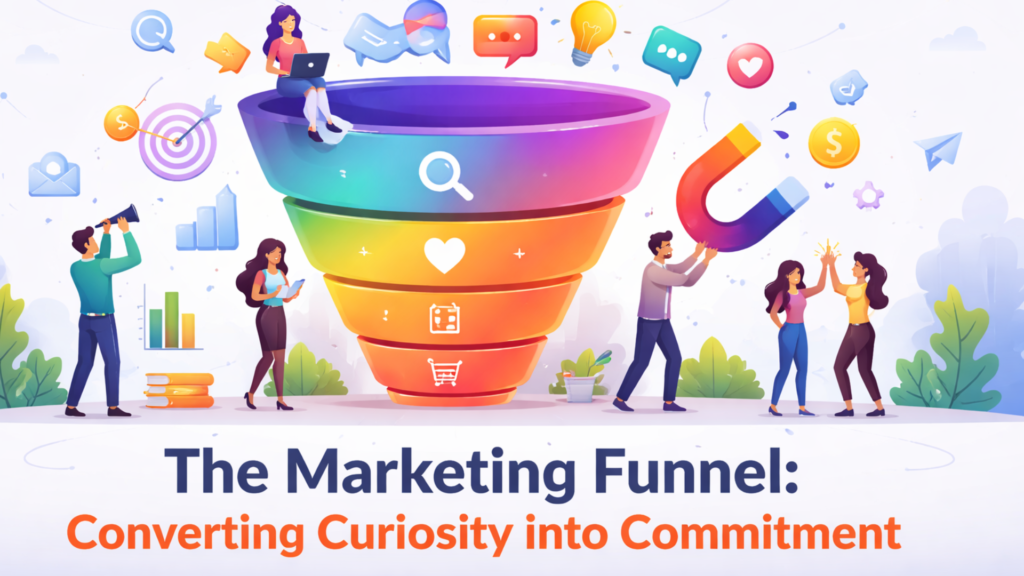
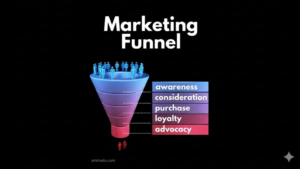
The marketing funnel in today’s vast and ever-evolving digital ecosystem reflects the reality that attention is a scarce commodity and loyalty is even rarer. Brands no longer thrive merely by being visible—they succeed by guiding individuals through a carefully orchestrated journey. This journey, often referred to as the marketing funnel, is not a rigid pipeline but a fluid, psychological pathway that transforms passive observers into devoted advocates.
Rather than viewing the marketing funnel as a linear descent, modern marketers interpret it as a dynamic framework—one that adapts to behavioral signals, contextual triggers, and emotional resonance.
1. The funnel commences at its widest point with the awareness phase—a moment when prospective customers come to gain their first exposure to your brand. At this stage, they are not deliberately searching for what you offer; rather, they are passively noticing and forming an initial impression of your presence. This phase is less about persuasion and more about visibility. It requires a strategic blend of content dissemination, storytelling, and digital presence
Marketers employ various channels such as search engine optimization, social media broadcasting, influencer collaborations, and display advertising. However, the emphasis should be on contextual relevance rather than sheer reach. A well-placed message in the right environment often outweighs mass exposure.
Instead of aggressive promotion, brands should focus on value-oriented communication. Educational blogs, engaging visuals, and thought-provoking videos serve as entry points that gently pull audiences into the ecosystem.
In essence, awareness is about sparking curiosity without demanding commitment.
- Interest Stage: Cultivating Engagement
Once awareness is established, the next challenge lies in nurturing interest. At this stage, the audience begins to explore your brand more intentionally. They might visit your website, browse your social media profiles, or consume additional content.
Here, the tone shifts from introduction to engagement. The goal is to sustain attention by offering deeper insights and meaningful interactions. This is where content stratification becomes essential—delivering layered information that caters to varying levels of curiosity within the marketing funnel.
Long-form articles, explainer videos, webinars, and email newsletters are particularly effective during this phase of the marketing funnel, as they allow brands to communicate their value proposition with depth and clarity.
Equally important is personalization. Modern consumers expect tailored experiences that align with their preferences and behaviors. By utilizing audience insights and behavioral patterns, brands can create impactful content that aligns with audience interests on a personal level—enhancing connection and deepening engagement throughout the marketing funnel.
Interest is not merely about capturing attention—it is about sustaining it with purpose and precision, guiding audiences smoothly through the evolving stages of the marketing funnel.
3.Consideration Stage: Building Trust and Credibility
As prospects move deeper into the funnel, they enter the consideration phase—a critical juncture where evaluation takes precedence. Here, individuals compare options, assess credibility, and weigh the benefits of different solutions.
This stage demands transparency and authenticity. Overstated claims or exaggerated promises can erode trust instantly. Instead, brands should adopt a proof-driven approach—demonstrating value through tangible evidence.
Case studies, testimonials, product demonstrations, and detailed guides play a pivotal role in this phase. These elements provide reassurance and validate the brand’s competence.
Another key aspect is addressing objections proactively. Every potential customer harbors doubts—be it pricing concerns, usability issues, or perceived risks. By acknowledging and resolving these uncertainties, brands can foster confidence and reduce friction.
Consideration is essentially a dialogue—one where trust is cultivated through honesty and substantiation.
- Intent Stage: Expressing Buying Inclination
This stage signifies the evolution from observational assessment to a more decisive predisposition toward action. At this juncture, prospective buyers begin to demonstrate explicit cues of transactional interest. They may shortlist products, initiate demo requests, or opt into trial-based experiences.
Though seemingly minimal, these behaviors carry substantial significance—they indicate a cognitive shift from exploratory browsing to resolute evaluation, where intention begins to crystallize into potential commitment.
Marketers are required to act with calculated accuracy at this phase. Well-timed touchpoints—such as retargeted promotions, bespoke email communication, and time-sensitive incentives—can strengthen buyer inclination and hasten the transition toward conversion.
Despite this, delicacy in approach is paramount. Heavy-handed tactics may disturb the natural progression of choice. Instead, the focus should center on enabling fluidity—easing constraints and clarifying the route toward commitment.
Intent is a delicate phase where encouragement must be balanced with restraint.
- Conversion Stage: Sealing the Commitment
Conversion is the culmination of the funnel—the moment where interest crystallizes into action. Whether it’s a purchase, subscription, or sign-up, this stage represents the realization of marketing efforts.
Yet, achieving conversion requires more than just a compelling offer. The entire experience—from landing page design to checkout flow—must be seamless and intuitive.
Obstructive elements such as intricate forms, delayed loading speeds, or unclear guidance can easily disrupt the progression. Hence, meticulous optimization becomes indispensable. Every component should be intentionally crafted to reduce uncertainty and enhance transparency.
Equally significant are credibility cues. Protected payment systems, well-defined return assurances, and easily accessible support channels foster reassurance and alleviate apprehension.
Conversion, therefore, extends beyond a mere exchange—it represents a pivotal instance of earned confidence.
- Retention Stage: Sustaining the Relationship
Contrary to traditional perceptions, the funnel does not end at conversion. In fact, the post-purchase phase is equally significant, if not more.
Retention focuses on maintaining the relationship with existing customers. It involves continuous engagement, value delivery, and satisfaction enhancement.
Email follow-ups, loyalty programs, exclusive offers, and personalized recommendations are effective tools for retention. These initiatives reinforce the customer’s decision and encourage repeat interactions.
Moreover, customer support becomes a defining factor. Prompt and empathetic assistance can transform a one-time buyer into a long-term patron.
Retention is about nurturing continuity—ensuring that the relationship evolves rather than dissipates.
- Advocacy Stage: Amplifying Influence
At the base of the funnel lies advocacy—the stage where satisfied customers become brand ambassadors. These individuals voluntarily promote your brand through word-of-mouth, reviews, and social sharing.
Advocacy is a powerful yet often underestimated force. Recommendations from peers carry far more credibility than traditional advertising.
To cultivate advocacy, brands must focus on delivering exceptional experiences. Beyond functional satisfaction, emotional resonance plays a crucial role. Encouraging user-generated content, referral programs, and community engagement can further amplify this effect.
The Evolution of the Funnel: From Linear to Cyclical
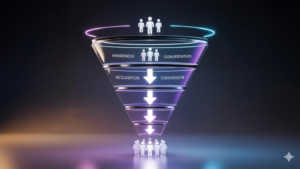
While the traditional funnel suggests a one-way progression, modern consumer behavior is far more intricate.
This has led to the emergence of the cyclical funnel model—a more holistic representation that emphasizes continuity and feedback loops.
In this model, retention and advocacy feed back into awareness, creating a self-sustaining ecosystem. Satisfied customers attract new prospects, who then embark on their own journey.
Understanding this fluidity allows marketers to design strategies that are adaptable rather than rigid.
The Role of Data and Technology

In the modern marketing landscape, relying solely on instinct is no longer adequate. Data acts as the structural foundation of funnel refinement, uncovering meaningful patterns in user behavior, inclinations, and friction areas.
Advanced analytical platforms empower marketers to monitor vital performance indicators such as conversion efficiency, interaction intensity, and exit points. These data-driven observations guide informed decision-making and illuminate opportunities for strategic enhancement.
Automation amplifies effectiveness by optimizing routine functions and supporting real-time engagement. Whether through sequenced messaging or tailored recommendations, it empowers a more dynamic and personalized strategy.
Nonetheless, equilibrium is key. The essence of authenticity must remain intact, even as efficiency becomes a priority.
Common Pitfalls and How to Avoid Them
Despite its effectiveness, the marketing funnel is often misinterpreted or poorly executed. Some common pitfalls include:
- Overemphasis on acquisition: Neglecting retention can lead to high churn rates.
- Generic messaging: Lack of personalization reduces engagement.
- Ignoring data: Decisions based on assumptions rather than insights can be detrimental.
- Fragmented experience: Inconsistency across channels disrupts the journey.
To avoid these issues, marketers must adopt a holistic perspective—one that considers the entire lifecycle rather than isolated stages.
Crafting a Funnel That Resonates
Designing an effective marketing funnel requires more than technical expertise. It demands empathy, creativity, and strategic foresight.
Understanding your audience is paramount. Their needs, aspirations, and challenges should guide every decision. By aligning your messaging with their journey, you create a seamless and meaningful experience.
Consistency is equally important. From branding to communication, every touchpoint should reflect a cohesive identity.
At its core, agility is crucial. The online landscape is ever-changing, and user expectations are continuously being redefined. A strong funnel is one that adapts fluidly to these ongoing shifts.
Final Reflections

The marketing funnel is not merely a conceptual framework—it is a living, breathing system that mirrors human behavior. It encapsulates the delicate interplay between curiosity, trust, and decision-making.
When carried out with meticulous precision and sincerity, it becomes a formidable catalyst for expansion. It reshapes brief interest into long-term loyalty, and transactions into purposeful connections.
In a world saturated with choices, the brands that succeed are those that guide rather than push, engage rather than interrupt, and resonate rather than merely exist.
Ultimately, the marketing funnel is not about selling—it is about connecting. The marketing funnel transcends the idea of mere selling—it becomes a framework for cultivating genuine relationships. It is about understanding human behavior, aligning with customer needs, and creating connections that are not only impactful but also enduring.
Author : MINHA LATHEEF.C